Autism Awareness Day Collection Clipart Review
As a designer who spends more time troubleshooting stitch density than admiring color palettes, I approach every new digital asset with a healthy dose of skepticism. The market is flooded with clipart that looks beautiful on a screen but falls apart under the needle. When I first pulled up the Autism Awareness Day Collection Clipart, my initial thought was practical: does this translate well to thread? Does it have the visual weight needed for a finished product that won’t look lost or cluttered?
This isn’t just another generic graphic. It is a collection of Illustrations and Graphics designed specifically for those looking to create meaningful, recognizable symbols for autism awareness. But as someone who has produced hundreds of handmade products for small shops and personal gifts, I know that "meaningful" doesn't always mean "embroidery-friendly." Let’s break down how this digital embroidery file performs in real-world scenarios, from the hoop to the final press.
First Impressions and Visual Personality
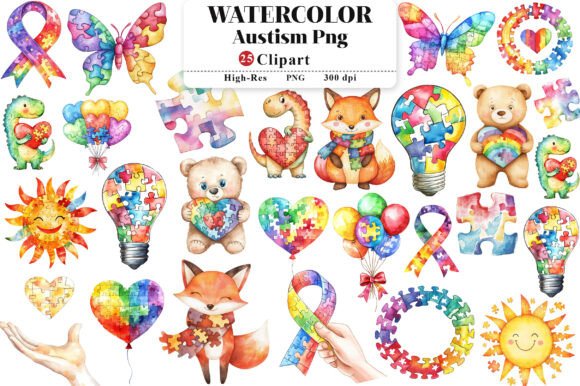
The moment you open the ZIP folder containing these 25 PNG files, the intent is clear. The designs lean into the iconic puzzle piece motif and ribbon symbolism associated with Autism Awareness Day. However, what stands out immediately is the clean line work. In machine embroidery, complexity is often the enemy of clarity. If a design has too many tiny, intersecting lines, the resulting fabric can pucker, tear, or simply look like a muddy blob of thread.
The mood of this collection is supportive yet bold. It feels appropriate for both serious advocacy campaigns and lighthearted community events. The shapes are distinct enough to be recognized instantly, which is crucial for any custom apparel or embroidered patch. When I look at these design assets, I see potential for high-contrast stitching. The transparent backgrounds provided in the PNGs make it incredibly easy to visualize placement without fighting against a white square backdrop during the digitizing or hooping process.
Real-World Application: The Tote Bag Scenario
To truly test a design, you have to imagine it on a physical object. Let’s say I am preparing an order for a local boutique that wants to sell tote bags for Autism Awareness Month. These bags need to be durable, stylish, and clearly communicate their message.
If I were to place this machine embroidery design on a canvas tote, the results would likely be striking. The puzzle pieces or ribbons, depending on the specific file chosen, offer a good balance of negative space and filled areas. This allows for creative use of thread colors. For instance, using a bright blue satin stitch for the outline against a natural canvas background creates immediate pop. Alternatively, filling the shapes with varying shades of blue thread adds depth without requiring excessive detail that might get lost in the weave of the bag fabric.
This approach works equally well for sweatshirt embroidery. A chest-left logo featuring one of these icons offers a subtle, professional touch that customers appreciate. It signals support without being overwhelming. For baby embroidery, such as onesies or burp cloths, the softer, rounded edges of some of these graphics provide a gentle aesthetic that parents love. The key here is versatility; the collection provides enough variety to suit different product categories without feeling repetitive.
Where Caution Is Required
No design is perfect for every situation, and honesty is vital for any reviewer. There are specific contexts where this autism png collection requires careful consideration.
- Small Hoop Sizes: If you are working with very small hoops (under 4x4 inches), intricate details within the puzzle pieces may become indistinguishable. Fine lines can merge together, turning into solid blobs. I recommend simplifying the design or choosing a larger format for small items like embroidered patches or hat fronts.
- Textured and Stretchy Fabrics: While the shapes are clean, textured fabrics like chenille or heavy terry cloth can obscure fine stitching. Similarly, stretchy knits require proper stabilizer usage to prevent distortion. If the design includes tiny lettering or complex internal patterns, these surfaces will challenge even the most skilled operator.
- Dense Stitch Areas: Always check the stitch density before committing to a large print run. If the fill stitches are too dense for the fabric type, you risk breaking needles or creating stiff, uncomfortable garments. This is particularly important for commercial embroidery projects where customer comfort is paramount.
- Curved Surfaces: Applying flat graphics to curved surfaces like caps or sleeves requires advanced techniques. Without proper padding or multiple angles, the design may look warped or misaligned.
Impact on Product Value and Brand Consistency
Using high-quality design assets directly influences how customers perceive your brand. A crisp, well-executed embroidery job suggests professionalism and attention to detail. Conversely, a sloppy finish can undermine the emotional weight of the message.
The Autism Awareness Day Collection Clipart supports brand consistency by offering a cohesive visual language. Whether you are creating Etsy listings, printable mockups, or actual physical goods, having a unified set of icons helps establish recognition. Customers trust brands that present a polished image. When a buyer sees a neatly stitched ribbon or puzzle piece on a kitchen towel or pillow cover, they associate that quality with the care put into the entire product.
Furthermore, the giftability factor is enhanced by the symbolic nature of the imagery. People buy these items not just for utility, but to show solidarity. A well-designed personalized gift becomes a conversation starter, extending the reach of your craftsmanship beyond the immediate transaction.
Practical Designer Notes for Success
Before you load this file into your machine, follow these steps to ensure a successful outcome:
- Test on Scrap Fabric: Never assume a design will work perfectly on your final material. Run a test on the same fabric and stabilizer combination you plan to use.
- Check Thread Contrast: Ensure there is sufficient contrast between your thread colors and the fabric. Low contrast can make the design disappear, especially in dim lighting.
- Review Stitch Types: Identify where satin stitch, fill stitch, and running stitch are used. Satin stitches should generally be kept narrow to avoid bulk, while fill stitches benefit from proper underlay to stabilize the fabric.
- Inspect Small Details: Zoom in on the digital preview. Are there any elements so small they might not stitch out cleanly? If so, consider merging them or removing them.
- Confirm Licensing: Since this is a commercial-grade resource, verify the license terms regarding selling finished products. Most clipart collections allow for end-product sales, but restrictions may apply to reselling the digital files themselves.
- Use Proper Stabilizer: The right stabilizer makes the difference between a puckered mess and a smooth finish. Cut-away stabilizers are often best for stretchy fabrics, while tear-away works well for woven materials.
Final Verdict
The Autism Awareness Day Collection Clipart is a strong addition to any designer’s library. It balances symbolic recognition with embroidery-friendly geometry. It is versatile enough for craft business merchandise, from tote bag design ideas to holiday embroidery projects. By understanding its strengths and limitations, you can create finished product offerings that are not only visually appealing but also technically sound. For Etsy sellers and small shop owners looking to tap into the awareness movement with professionalism and care, this collection delivers exactly what is needed.